Tendepay
About the project
From cash chaos to a full view of the business #
An end-to-end mobile and web experience giving Kenyan merchants real-time control of their operations. Concept to handoff in six months.
- Role
- Senior Product Designer. UX strategy, information architecture, UI lead
- Timeline
- Six months, concept to handoff
- Status
- Live on Google Play, App Store and web
- Impact
- 1,120+ businesses, 100K+ users, Ksh 2M monthly recurring revenue
The visibility gap #
In 2021, while consumer payments went digital, Kenya's small merchants were still drowning in manual admin. With no real-time view of income and expenses, three things kept happening.
Two personas anchored the work: a CFO managing bulk payments and approvals, and a micro-merchant who needs simple invoicing and a clear picture of the day.
- 01
Revenue leakage
Theft and pilferage nobody could see, because nobody could see the money move.
- 02
Reconciliation by hand
Fragmented providers reconciled on paper and in Excel, days after the fact.
- 03
Stalled growth
Owners diverted business funds to personal spending without noticing, and the business paid for it later.
Five steps that replaced a cash box #
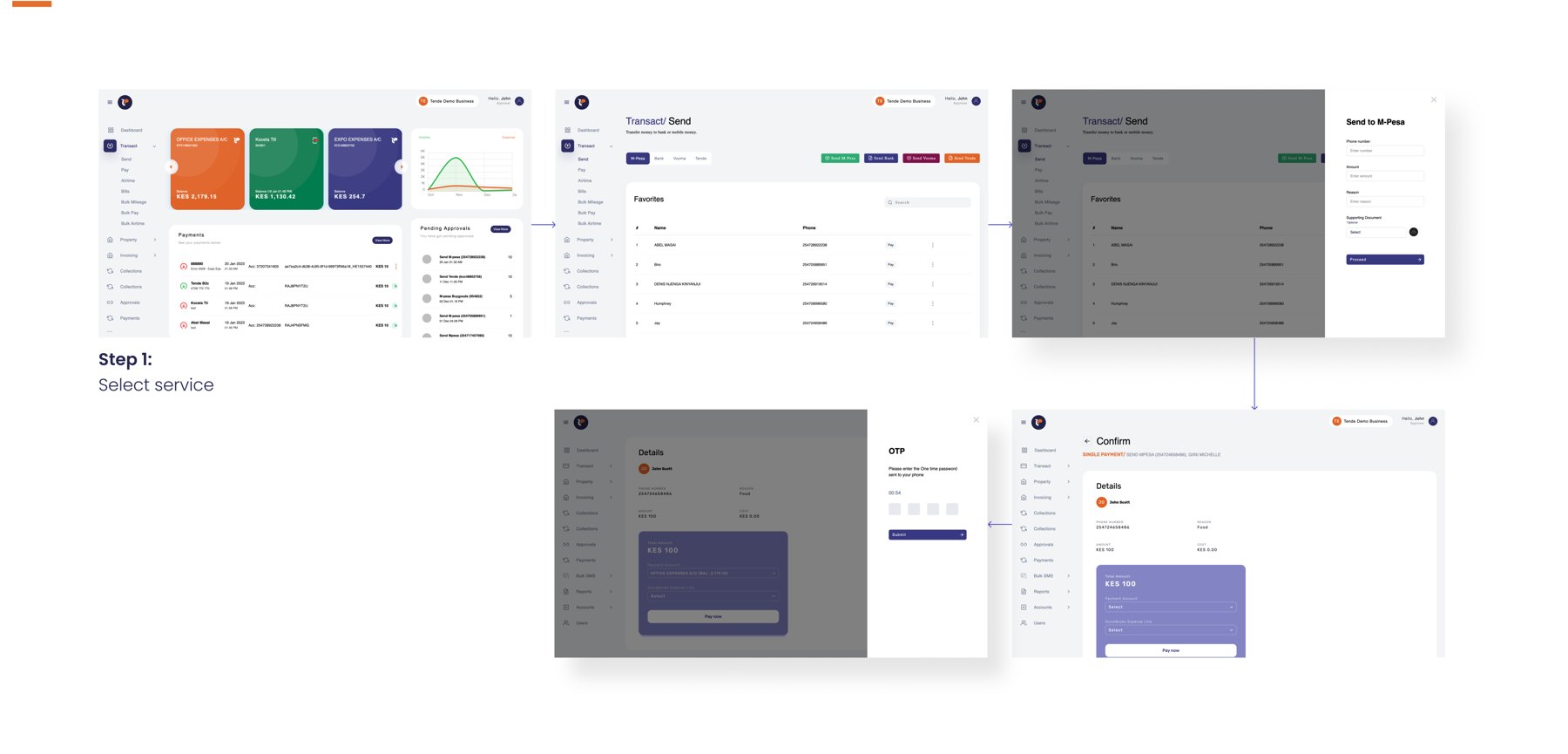
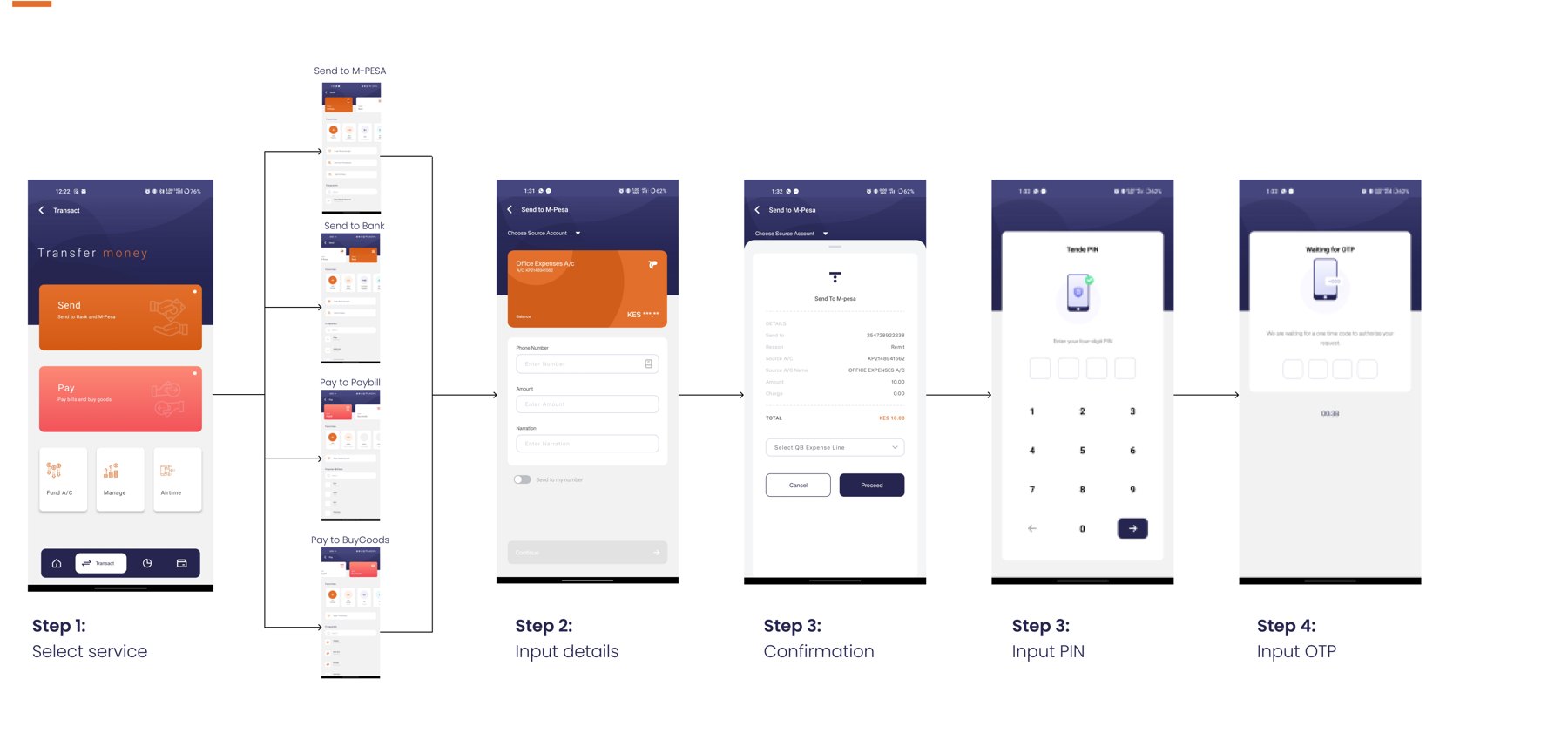
Petty cash was where the leakage lived, so it became the first flow. Select a service, enter the details, confirm, PIN, OTP. Every step mirrors what people already do with mobile money, so nothing needed to be learned.
With Product, I translated business objectives into a prioritised roadmap through weekly alignment sessions. This one feature served both users and the goal of onboarding 500 businesses.
With Engineering, I opened feasibility reviews at low fidelity. Back-end constraints found early cut potential rework by about 30% and shortened time to market.
Calls made under deadline #
Design system or speed. Developers needed to build immediately, but we had no shared visual language. I front-loaded a design system and delayed high-fidelity mocks by a week. Sprint velocity rose about 40% in the second half of the project.
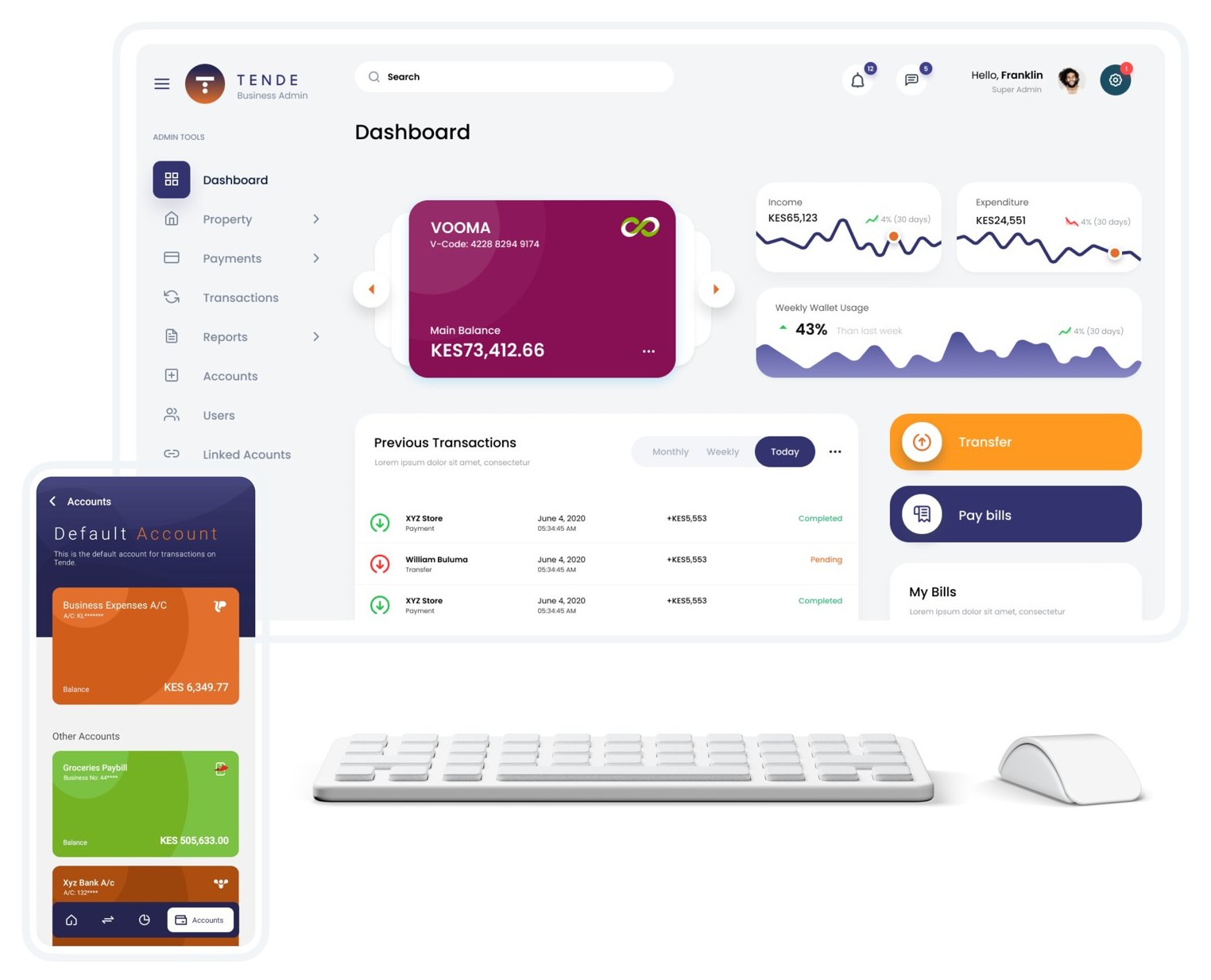
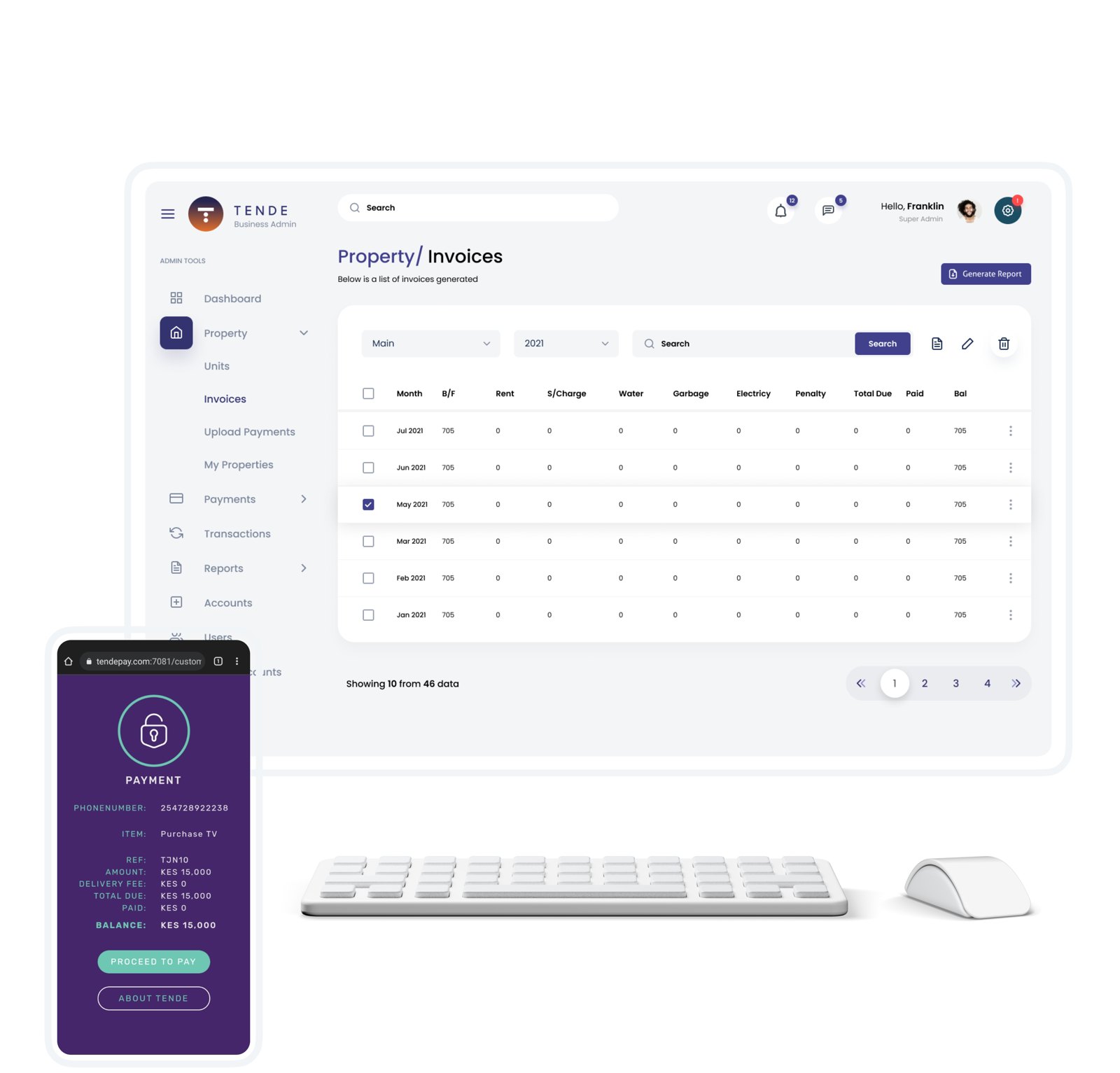
Web first in a mobile market. Kenya is mobile-centric, but reconciliation is high-cognitive-load work. I argued for a web-first dashboard for the data density a phone cannot hold, with the phone kept for the moments that happen on the move: checkout, approvals, a quick look at the day.
Front-loading the design system cost one week and bought a 40% velocity gain.
Control, clarity, cost #
- 1,120+Active businesses within year one, against a target of 500.
- Ksh 2MMonthly recurring revenue within year one, five times the growth planned for.
- 100K+Users on the app, fully automated and real time.
Looking back. With longer runway: A/B-tested dashboards, offline mode, Swahili-first language support, and cash-flow forecasting. From a reactive tool to a proactive partner.